
Bodies as Evidence
The Best Werewolf Short Stories 1800-1849This flow examines how hands, feet, skins, clothing, and wounds become contested signs of identity.
increasing Bearing strength in each event
 decreasing
Bearing strength in each eventdecreasingThe Missing Hand
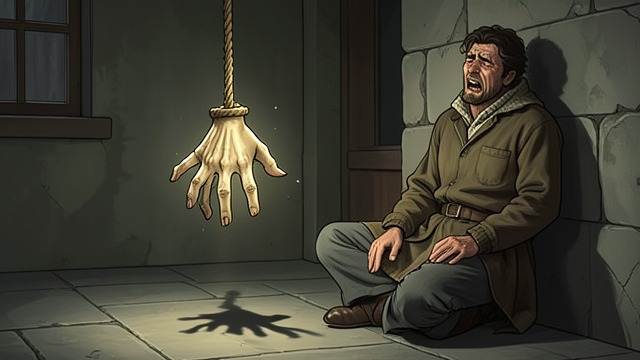
The Missing Hand
Physical Sign
Hugues Wulfric’s severed hand appears to confirm the werewolf legend. His body is made to speak the language of his accusers.
Identity Burden
The wound does not reveal what he is; it records what Willieblud did. The body becomes an archive of persecution.
The Wolf Foot
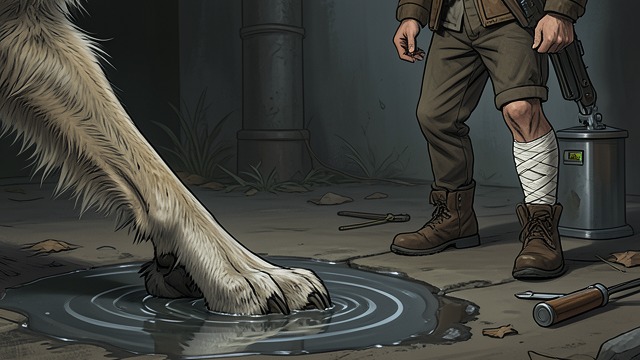
The Wolf Foot
Fragmentary Meaning
Pierre Bloui’s trapped wolf foot is detached from its context. Its incompleteness makes it easy to attach to another injury.
Evidentiary Violence
The fragment becomes proof because witnesses want a coherent story. Material reality is not enough without disciplined interpretation.
The Hidden Garments
The Hidden Garments
Clothing as Identity
The Sire’s clothes mark the boundary between noble man and alleged wolf. Their absence leaves him socially and physically exposed.
Conspiratorial Use
The Dame’s plot turns clothing into a weapon. Identity can be controlled by whoever controls the material signs attached to the body.
The Protective Skin
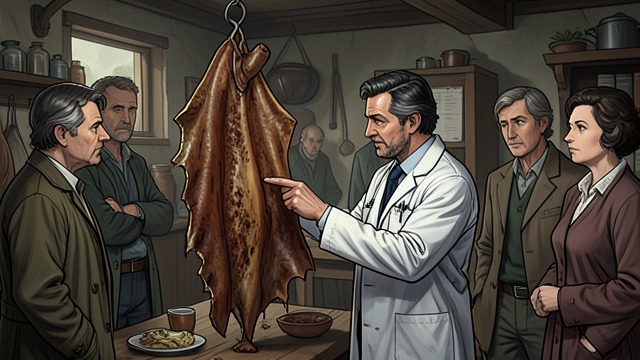
The Protective Skin
Animal Material
The tavern’s theory that a werewolf skin repels wolves turns the monster’s hide into a talisman. The body is imagined as transferable power.
Comic Skepticism
The claim sits beside medical jargon and tavern ignorance. Knowledge becomes theatrical when no one can distinguish observation from legend.
The Memorial Wolf
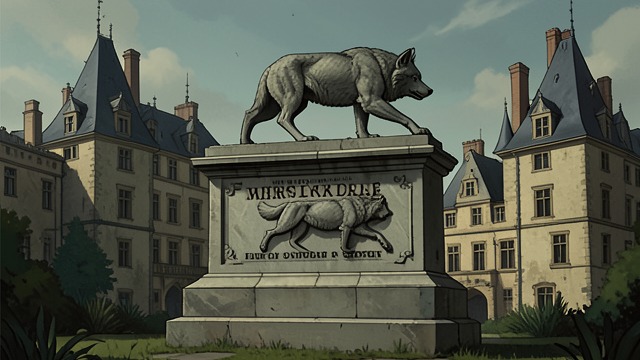
The Memorial Wolf
Stone Record
A wolf missing one forefoot is carved above Château de Vardes. The monument gives a permanent shape to a disputed event.
Memory’s Distortion
The carving preserves the sign but not the full injustice. A body part outlives the people whose lives it damaged.
Hugues Wulfric’s mutilation
the investigation before Francoise’s trial
the Sire’s forest ordeal
the Limousin tavern conversation
long after the Vardes rescue
